Researchers increasingly challenge outdated views, revealing women’s ADHD as biologically and psychologically distinct
Discovering Balance: The Science Behind Women’s ADHD
Dr. Katherine Tidman brings a clear, science-based understanding to the often-overlooked experience of women with ADHD. Drawing from clinical research and practical application, the book explores how hormones, nutrition, exercise, and mindfulness shape focus, emotion, and overall well-being. It challenges outdated views that oversimplify ADHD as distraction alone, showing instead how interconnected the mind and body truly are. Through evidence-backed strategies and daily practices, readers learn to align medical treatment with lifestyle change. The message is straightforward yet hopeful: with knowledge and structure, women can build stronger focus, healthier habits, and renewed confidence in their everyday lives.
Fluctuating hormones influence dopamine and focus, making awareness of menstrual, postpartum, and menopausal shifts vital for management.
Nutrition
Balanced intake of omega-3s, magnesium, and vitamin D supports attention, mood stability, and emotional control in women with ADHD.
Mindfulness
Daily mindful breathing and reflection reduce impulsivity, improve emotional balance, and strengthen focus alongside medical and nutritional strategies.
Behind the Pen
Katherine Tidman
Dr. Katherine Tidman isn’t just a scientist—she’s a force of curiosity and courage. Holding a PhD in Cell Signaling and Developmental Biology from Johns Hopkins University, she spent years decoding cellular mysteries before life handed her one of its own: a diagnosis of Secondary Progressive Multiple Sclerosis. Instead of retreating, she turned her analytical mind toward survival and discovery. Through rigorous research, she uncovered how nutrition, supplements, and neurobiology intertwine to shape focus, energy, and emotional balance. As a mother of two, Katherine transformed her knowledge into advocacy, launching a consulting practice that helps patients translate scientific research into meaningful conversations with their doctors. Her work bridges the gap between laboratory precision and human experience. In her writing, she transforms complex neuroscience into accessible wisdom, helping women understand the powerful relationship between their minds, bodies, and hormones. Her book on women with ADHD stands as both guide and revelation—a blend of hard science, empathy, and lived truth. It reminds readers that understanding biology isn’t just about cells and circuits; it’s about reclaiming control, clarity, and confidence in daily life.
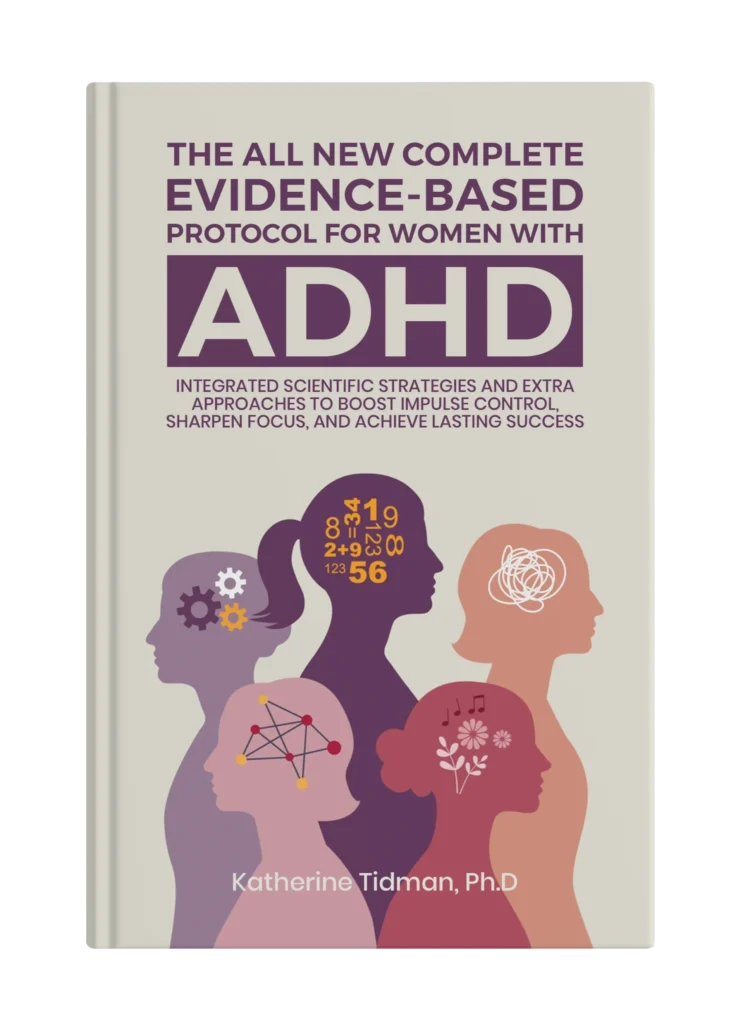
The All New Complete Evidence-Based Protocol For Women With ADHD
Dr. Katherine Tidman’s groundbreaking book redefines how we understand and manage ADHD in women. Drawing on years of research and personal insight, it connects the dots between brain chemistry, hormones, nutrition, and mindfulness. Tidman simplifies complex science into actionable, evidence-based steps that help readers improve focus, mood, and overall well-being. She emphasizes how factors like estrogen shifts, nutrient deficiencies, and lifestyle habits uniquely influence women’s ADHD symptoms, often overlooked by traditional medicine. Through practical guidance and relatable explanations, the book empowers women to harness their neurodivergent strengths—such as creativity, empathy, and problem-solving—while managing emotional and cognitive challenges with clarity and confidence. It’s not just about coping; it’s about thriving.
The book highlights neuroplasticity as a foundation for healing and focus improvement. By retraining the brain through mindfulness, nutrition, and consistent routines, women can build new neural pathways that enhance attention, reduce impulsivity, and strengthen emotional control—transforming ADHD into a manageable, empowering strength.
Hormones, Health, Harmony
Dr. Tidman explains how hormonal shifts—menstrual, postpartum, and menopausal—significantly influence ADHD symptoms. Understanding and balancing these biological changes with mindful nutrition, rest, and medical support helps women achieve greater stability and clarity throughout life’s hormonal cycles.
Nutrition, Focus, Energy
Nutrient deficiencies in magnesium, zinc, vitamin D, and omega-3s often worsen ADHD symptoms. The book shows how optimizing diet restores neurotransmitter function, improving energy, focus, and emotional steadiness. Dr. Tidman empowers readers to use food as both science and self-care.
What People Are Saying
Shared Stories, Shared Strength
A brilliant, science-meets-heart guide that helps women finally understand and harness their ADHD with confidence.
Emma Brooks
Transformative, relatable, and refreshingly practical—a must-read for women ready to embrace their neurodivergent strengths fully.
Lily Grant
Smart, compassionate, and empowering—Dr. Tidman brings clarity, humor, and hope to women navigating ADHD’s daily chaos.
Nora Hayes
Finally, a book that explains ADHD in women through science, empathy, and real solutions that actually work.
Carla Dean
Eye-opening and inspiring, this book turns confusion into confidence and teaches women how to thrive with ADHD.